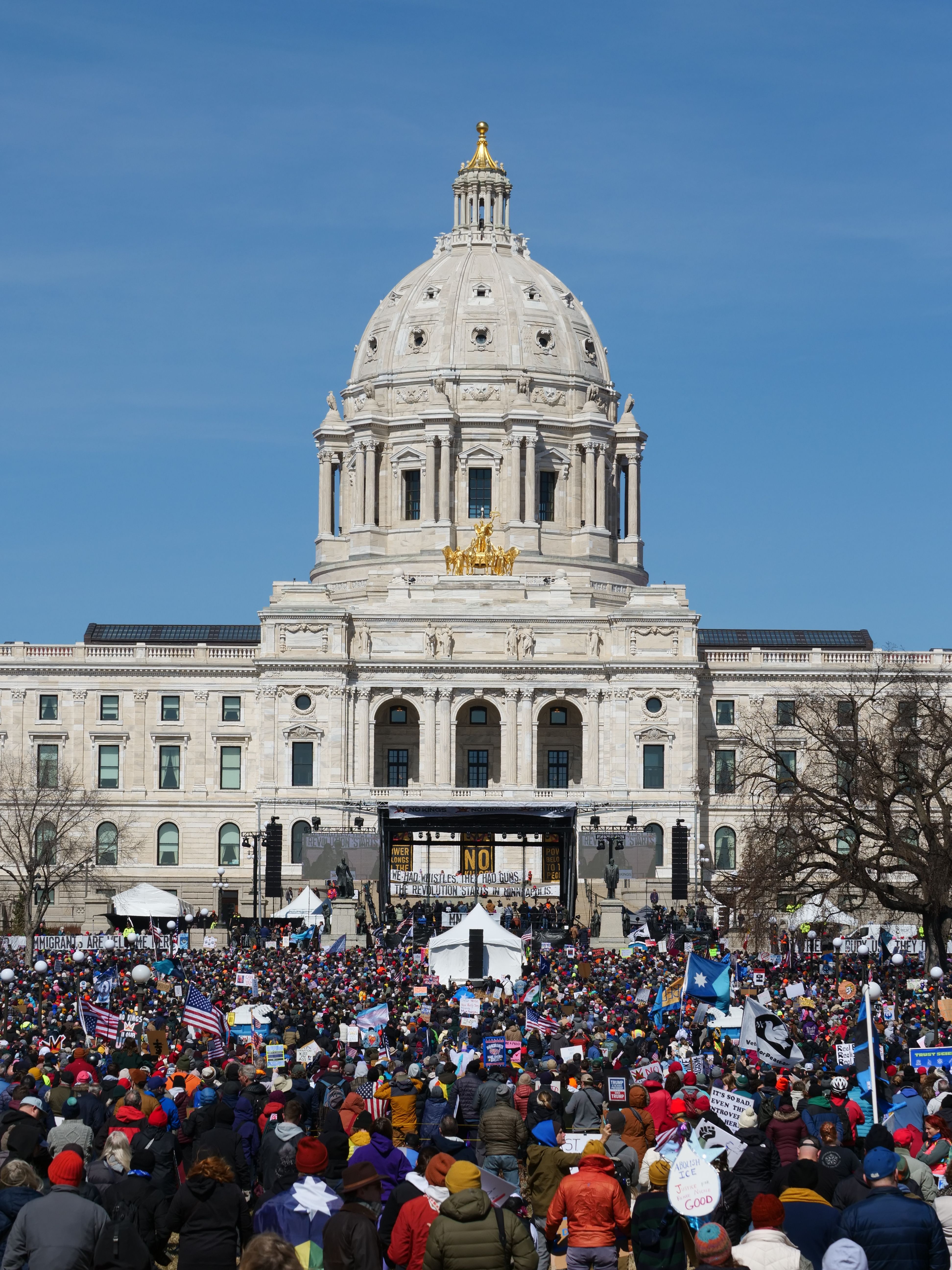
Those who found themselves on Twitter in early 2017 might remember the small, yet vocal witch movement to cast spells to “bind Trump” from harming Americans. Over the course of months, they agreed to partake in rituals in sync with the full moon. Even singer Lana Del Rey participated in the ritual. Around the time of Trump’s inauguration, she tweeted:
“At the stroke of midnight Feb 24, March 26, April 24, May 23. Ingredients can be found online.”
Those who knew about these rituals could immediately identify Lana Del Rey as a witch activist: those who wanted to use witchcraft for the greater good. The “Donald Trump” bind spell is an interesting case in which, through the power of social media, many people who had little to no experience in magic participated.[1] From a place of pure intrigue and anger against the government, they became a part of a magical community they knew nothing about.
It goes without saying that magical practices have political histories. Magic has been used by emperors and kings for political gain and has simultaneously been criminalized and ruthlessly tried in court. The word “occult,” after all, comes from the word occultus, meaning secret or hidden. Witchcraft threatened the power of those in high places and was therefore often sanctioned to underground circles and secret societies. But in the contemporary age, when the occult is not formally outlawed, how do politics and magic mingle?
Surprisingly or unsurprisingly, magical practice in general isn’t often delineated to a particular political ideology. Those on the right and left alike have used magic in their own collective interest. Take, for instance, the witches in 2017 who attempted to hex Trump, or Starhawk, the pagan writer who invoked her nature-based spirituality in support of Occupy Wall Street.[2] The right-wing has also started to welcome New Age practitioners, despite historically denouncing non-Christian activities.
A memorable image that came out of the January 6 Capitol protests was Jacob Chansley, a “QAnon Shaman” wearing horns with his face painted red, white, and blue. Chansley’s notoriety signals a rise in “conspirituality”— the New Age phenomenon of intersecting spiritual practice with the active participation in spreading conspiracy theories.[3] Conspirituality has found a home on the right, though it is certainly not exclusive to it. It is a complex phenomenon, wherein it need not be fundamentalist to a particular religion or ideology. At times, it can be a plea by those who are not recognized by the majority for acknowledgement when the powers that be fail to care for their demographic. For example, during the COVID pandemic, a sizable number of pagans and witches took to Facebook and posted conspiracy theories surrounding vaccines, 5G technology, and the fabrication of COVID-19.[4]
We should not be surprised that there is a significant overlap between those who practice magic and those who are politically active; magic and activism both have similar rituals of convening, chanting, song, and symbolic action.[5] Belonging to a magical community feels not so different from belonging to a political group, or even participating in a growing conspiracy. Magic can be an attractive source of resistance for people who have exhausted other options of resistance. And lest we forget, magic is as social as it is individual; it brings together like-minded people and is not immune to groupthink and even mob mentality—it is based in “belief,” a faith strongly centered on cultural context.
If you are a practicing witch, it’s worth considering using your divination practices to promote a cause. Studies have even shown that pagans are generally better politically educated than the general population and hold professional jobs related to civic betterment.[6] Online political communities have been fairly criticized for “slacktivism,” but there are plenty of other ways to bring magic into the lives of strangers. Mutual aid, planting trees, and canvassing your neighborhood can all be done as a part of spiritual practice. What better way to remind yourself that the universe is connected than to apply yourself to improving the livelihoods of others?
[1] Asprem, Egil. “The Magical Theory of Politics,” Nova Religio 23, no. 4 (2020): 18-19.
[2] Sabina Magliocco, “Witchcraft as Political Resistance,” Nova Religio 23, no. 4 (2020): 48.
[3] Susan Greenwood, “A Spectrum of Magical Consciousness: Conspiracy Theories and the Stories We Tell Ourselves,” Anthropology Today 38, no. 1 (2022): 3, https://doi.org/10.1111/1467-8322.12695.
[4] Giovanna Parmigiani, “Magic and Politics: Conspirituality and COVID-19,” Journal of the American Academy of Religion 89, no. 2 (2021): 508.
[5] Sabina Magliocco, “Witchcraft as Political Resistance,” Nova Religio 23, no. 4 (2020): 47.
[6] Sabina Magliocco, “Witchcraft as Political Resistance,” Nova Religio 23, no. 4 (2020): 45.
Tara Yazdan Panah is an essayist from Carlsbad, CA, and an Inglenook Features Writer. She is currently based in Cambridge, MA, where she works as a teaching fellow at Harvard Divinity School.

Inglenook Lit is an online literary magazine for magic enthusiasts and enchantment seekers
Copyright © 2021-2026
Inglenook Lit LLC

