***
‘The forest keeps what the fire does not.’
He was not born this way. I knew him before the forest did.
There was a time when his hands were just hands—five fingers, blunt nails, skin that split easily in winter. He used them to lift fallen branches, steady himself on slick ground, and brace doors that wouldn’t close all the way. He learned early how to keep pressure where it belonged, how to stay upright, and how to take the weight without comment.
The forest watched him do this for years.
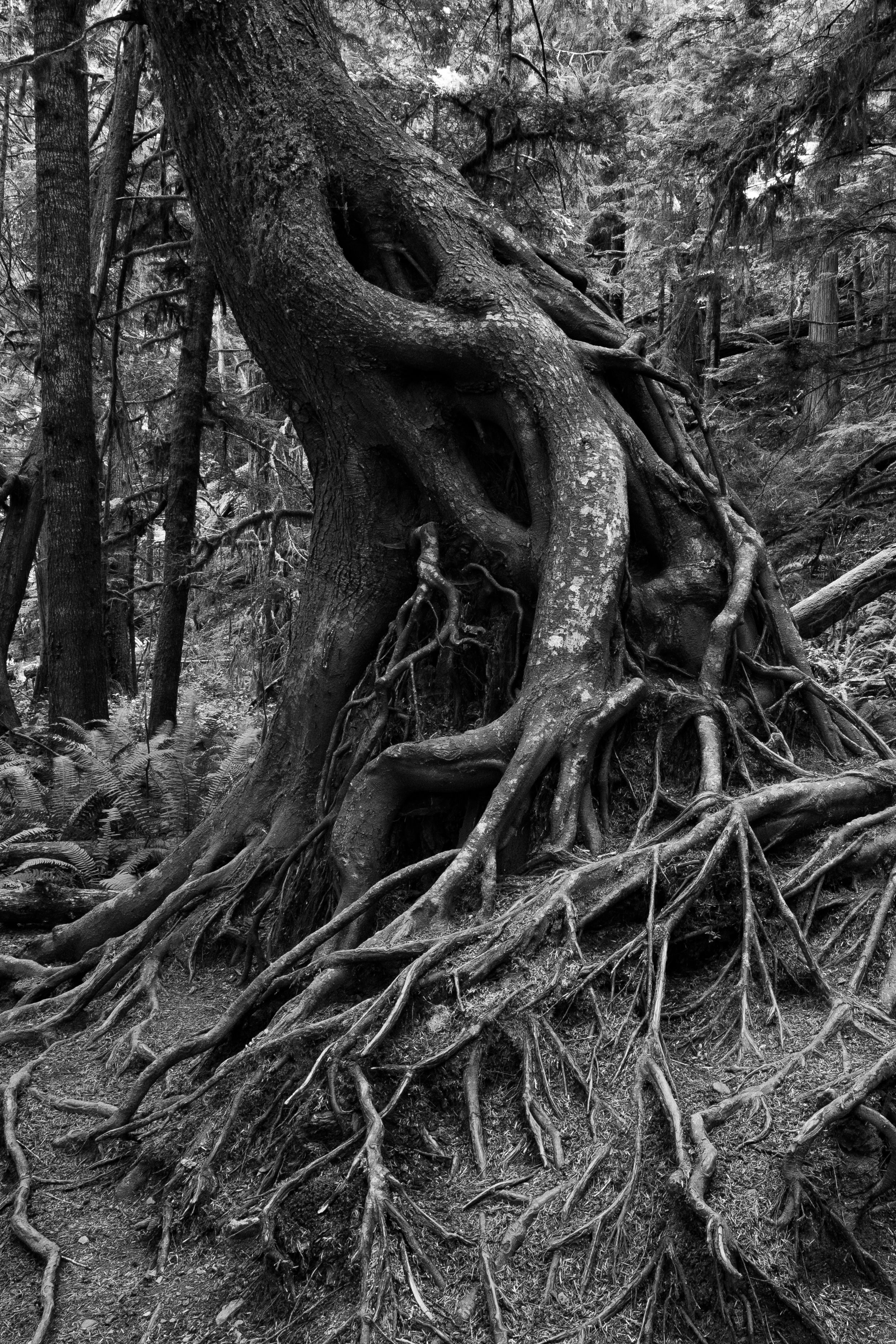
When the first changes came, they were subtle enough to dismiss. The ache along his spine. The way his shoulders thickened, joint by joint, as if preparing for a burden no one had named yet. His skin darkened in spots, roughening into something more like bark than flesh. He said it was dirt. Sap. A trick of light. The forest had burned before. He had stood too close then, too. The darkening had begun there, at the threshold of the woods.
He kept working.
His skull emerged, as if rising from the soil. Not all at once, but slowly, bone showing through the face, pale and patient, as if waiting for the rest of him to catch up. I imagined branches following, pushing through the crown of his head, splitting skin cleanly, branching upward in deliberate arcs.
By then, I understood what he was becoming. The understanding did not stop it from happening.
There was a night when the forest burned just close enough to be dangerous. Ash fell like an unwanted decision. Animals fled. Trees cracked and split from a heat the forest had survived once already, but could not survive twice. He stood at the edge and made a choice. If something did not hold, everything would run.
He did not run.
I imagine him sinking to the ground like something heavy settling—knees bending, hands spreading wide, fingers digging until they found a grip. Roots threaded through his welcoming palms. The forest did not need permission. The pain was immediate and intense, bright as frost. He did not cry out.
When morning arrived, the fire had diminished but had not gone out. It was just redirected. And hands that once braced doors no longer rose from the earth.
I think of him as crouched among the trees, part wood, part bone, part memory of a man who once moved freely through the forest. His body never leaves. It is made to hold.
The forest puts its weight on him—season after season, loss after loss. He carries it. Not as punishment. Not as protection.
Only because something had to remain.
Lauren Kelley writes fiction and creative nonfiction that examine thresholds, unseen structures, and the tension between control and surrender. Her work blends procedural precision with mythic resonance. She is the founder of Unreliable, On Purpose and lives in the Midwest with her husband and a small constellation of animals.

Inglenook Lit is an online literary magazine for magic enthusiasts and enchantment seekers
Copyright © 2021-2026
Inglenook Lit LLC

