“The man who comes back through the Door in the Wall will never be quite the same as the man who went out. He will be wiser but less sure, happier but less self-satisfied, humbler in acknowledging his ignorance yet better equipped to understand the relationship of words to things, of systematic reasoning to the unfathomable mystery which it tries, forever vainly, to comprehend”[1]
-Aldous Huxley, Doors of Perception
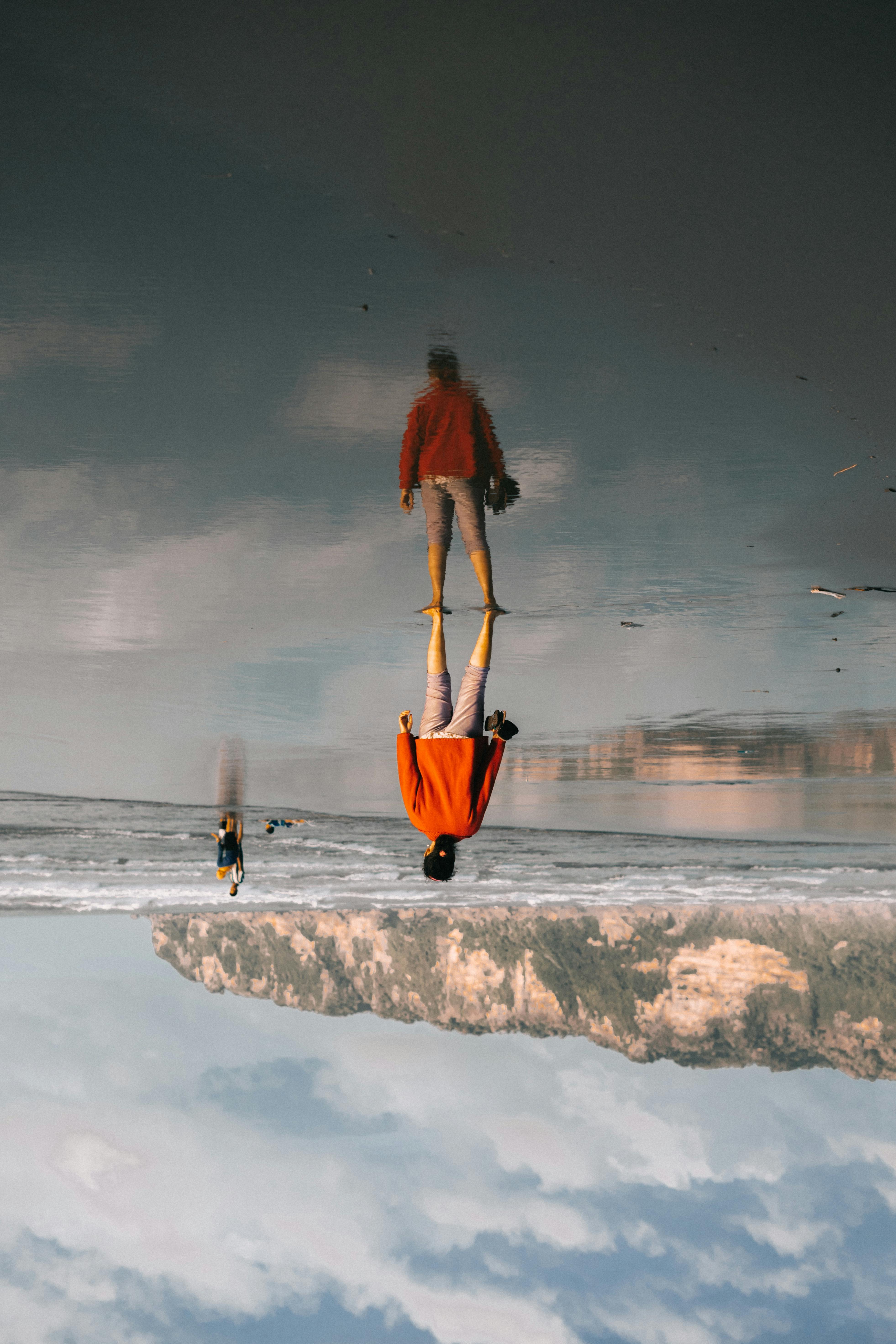
It only takes a moment for an earth-shattering experience to turn one’s outlook upside-down. Uncanny, metaphysical experiences that last mere seconds can reverberate for a lifetime. Instances that cannot be put into words, that disorient and destroy our understanding of the world and its mechanisms, are what religious scholars and theologians refer to as ontological shock. Ontology refers to the nature of being; the term “ontological shock” first pops up in Christian theologian Paul Tillich’s 1951 book Systematic Theology, in which he describes this phenomenon as “a state of mind in which the mind is thrown out of its normal balance, shaken in its structure. Reason reaches its boundary line, is thrown back upon itself, and then is driven again to its extreme situation.”[2] Tillich brings the state of ontological shock into focus by citing the ecstatic experiences found in classic religious texts. These experiences were as all-consuming as a demonic possession, but rather than degrading the soul, they elevated the mind and spirit.
The term was popularized later in the 90s by Harvard psychiatrist John Mack, who interviewed patients who had claimed direct contact with extraterrestrials. These encounters had left them completely uncertain of metaphysical reality and necessitated that they seek psychological care. Jeffrey Kripal, a contemporary scholar of mysticism and paranormal events, grants great credence to these and similar testimonies. Kripal has found that the subjects of mystical and near-death experiences undergo what he refers to as “The Flip”: the realization that the universe is one vast mind, and that the separation of beings is illusory. Though this hypothesis has yet to be scientifically proven (though quantum physics points to its validity), its impacts on those who lived through such a turbulent perspective shift are no less real.
Methods of purposely reaching a state of ontological shock vary, but a common means is psychedelics, notably articulated by Huxley in the epigraph of this article. Psychedelics have also turned countless atheists into believers of some kind of higher power or order, which is its own sort of “ontological insurgency.” Others bypass external aids. Eckhart Tolle’s infamous account of ontological shock in his self-help book The Power of Now was prompted more unconventionally. After a night of profoundly unbearable depression, he felt he was drawn into an inner void, a terrifying experience that metamorphosed into a profound peace.[3] Tolle claims that this event led to the dissolution of his egoic mind, which opened his eyes to a non-dualist view of the world.
Just as interesting are those accounts in novels, which somehow aptly capture the ineffable experience. Elena Ferrante, in her Neapolitan Novels coins her own term for such a state when she describes protagonist Lila’s disorienting experience of “dissolving boundaries.” One New Years night, she witnesses her brother and his friends setting off fireworks on the roof of an apartment building. “she saw, she felt — as if it were true — her brother break […] something violated the organic structure of her brother, exercising over him a pressure so strong that it broke down his outlines, and the matter expanded like a magma, showing her what he was truly made of […] she had the impression that…every margin collapsed and her own margins, too, became softer and more yielding.”[4] This description could very well be categorized as a moment of ontological shock, where a sense of what is and what is not is completely put into question.
Literature can only approximate such an experience that few experience and can name. The irony of literature is that it is bound by language, which is shaped by the ontology with which we all come into the world. Yet the imperfections of the written word still provide a rich web of accounts to beseech us to think beyond the boundaries of our own understanding. The inadequacy of language does not make articulation futile. For the person who experiences ontological shock, it is a way to metabolize and break down maelstroms that bring our existence into question. For the listener, it is a humble reminder that the dimensions of life we understand are minuscule, even falsifiable and naïve.
[1] Aldous Huxley, The Doors of Perception and Heaven and Hell (London: Vintage Classics, 2004), 50.
[2] Paul Tillich, Systematic Theology, 3 vols. (Chicago: University of Chicago Press, 1951–1963), 1:113.
[3] Eckhart Tolle, The Power of Now: A Guide to Spiritual Enlightenment (Vancouver, BC: Namaste Publishing, 1997), 4–5.
[4] Elena Ferrante, My Brilliant Friend, trans. Ann Goldstein (New York: Europa Editions, 2012), 176.
Tara Yazdan Panah is an essayist from Carlsbad, CA, and an Inglenook Features Writer. She is currently based in Cambridge, MA, where she works as a teaching fellow at Harvard Divinity School.

Inglenook Lit is an online literary magazine for magic enthusiasts and enchantment seekers
Copyright © 2021-2026
Inglenook Lit LLC

