***
The archive smelled like dust and preservation fluid. Maya wheeled the cart of digitization boxes past the humming machines in the Preservation Lab, each one a small coffin of electromagnetic hope.
The estate donation of Margaret Thorne: reel to reel recordings, donated to the university’s Modern Voices collection three years ago. Mostly untouched. Maya’s supervisor had given her this job, a casual assignment, the kind that fills the gaps between more prestigious projects. Routine work. Safe work. Maya had almost said no.
“Still playing with dead people’s voices?” her colleague Derek had asked, not unkindly, when Maya had booked the afternoon for digitization.
She hadn’t answered. The truth that these voices kept her alive—or at least kept her tethered to something like living— seemed both too much and not enough to explain how she felt.
“The Erasure Room,” they called the digitization lab. Not officially. The unofficial names stuck because they were true in ways the budget committee never intended. To digitize was to erase the original, to consume it into a new medium. To preserve was to transform. Every voice that entered this room never left it the same way. That should have bothered Maya more than it did.
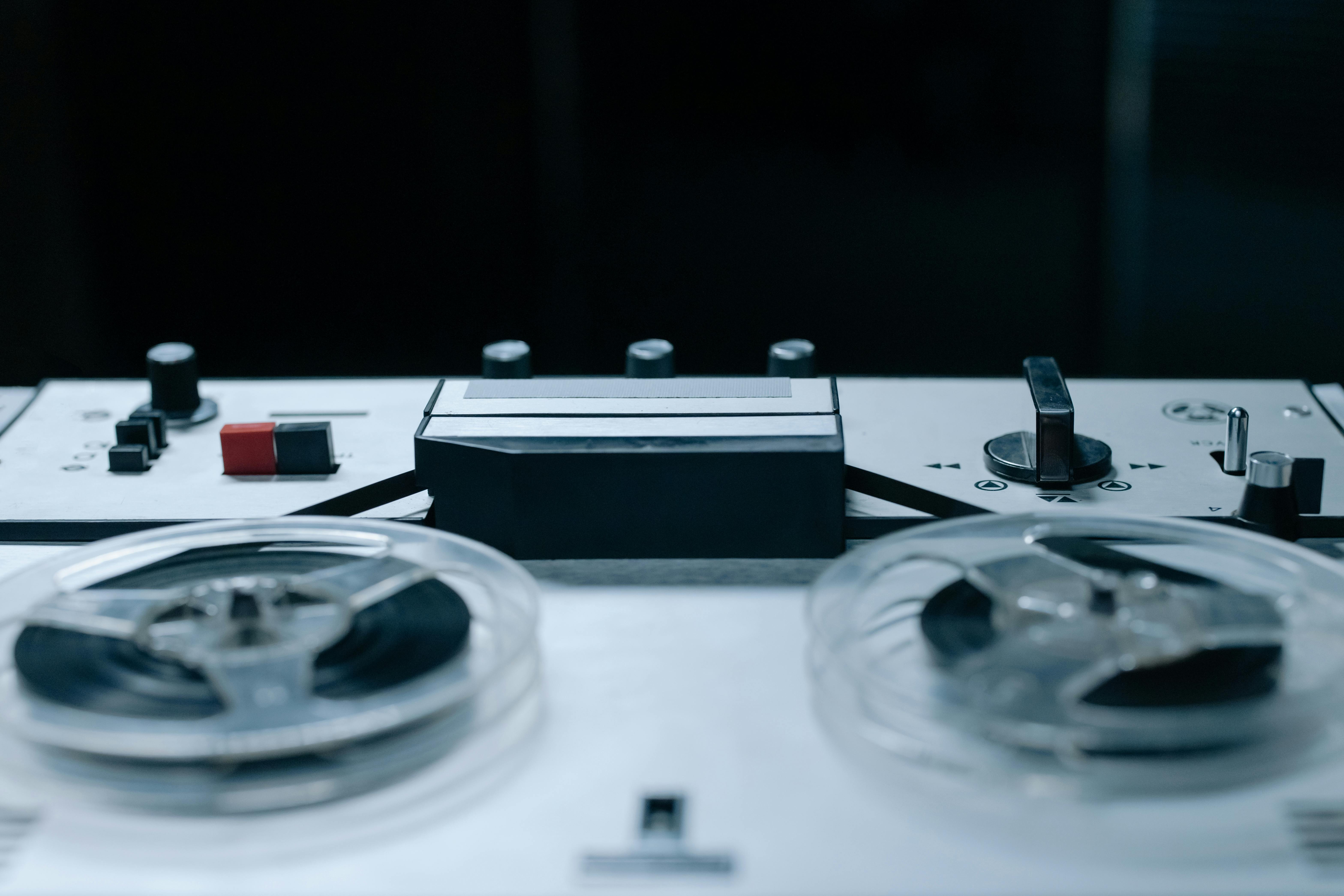
She threaded the first tape onto the player with practiced efficiency. The reels were labeled in careful handwriting: “M. Thorne Personal Recordings 1987-1991.” The edges of the boxes had yellowed like old teeth. She adjusted the levels, watched the needles settle, and pressed record on the digital system.
Static bloomed. White noise. The natural hiss of analog silence, not quiet but its aggressive opposite. Then: a voice. Female. Older. Speaking directly to the microphone in a way that suggested experience with being recorded.
“Margaret. November third. Nineteen eighty-seven. I’m sitting in the back studio at—” A pause. A sound that might have been a lighter.” At the station, after hours. The news cycle is finished. The corrected broadcasts are filed. No one here but me and the machines.”
The voice had a familiar quality. Not the individual inflections, those were specific to this Margaret Thorne, whoever she was, but something in the cadence. The rhythm of someone speaking to themselves while pretending to speak to others. A performance of solitude.
Maya listened through seven reels that afternoon. The recordings spanned four years of Margaret’s life: professional notes, voice memos, confessions disguised as daily documentation. Margaret had worked in radio. An announcer, a journalist, someone accustomed to the power of her voice to shape reality.
But these recordings weren’t professional. These were something else. Someone else.
By the third reel, Maya realized Margaret was speaking about losing her daughter. The story came gradually, not as revelation but as return to the same ground again and again, each pass wearing it thinner. The daughter’s name was Ellen. She’d been dead for six months when the recordings began. The cause: a car accident. Single vehicle. The stretch of highway near the reservoir.
“I keep thinking,” Margaret said on a December recording, her voice rougher, less controlled, “about how sound carries. How it travels. If I speak her name into a microphone, does that mean it’s preserved? Does the tape hold something of her? Ellen. Ellen, Ellen, Ellen. I’m speaking into darkness and hoping it speaks back.”
Maya had stopped the tape. She’d gone to the bathroom and sat in the stall for twenty minutes without moving. When she returned, she didn’t resume digitizing. She filed the reels carefully back in their boxes and wheeled them to storage.
That night, in her apartment above a Vietnamese restaurant, Maya couldn’t stop hearing Margaret’s voice. Not in the way one remembers audio as a memory of sound, but as a continuous presence, a frequency she’d tuned into and couldn’t quite turn off. The voice layered under the city noise, the traffic, the muffled television from adjacent units. It was Margaret speaking about Ellen.
It was Maya’s mother speaking about Maya’s sister.
The accident had happened fourteen years ago. On the same highway near the same reservoir, though that geography mattered less than the fact of it: her sister Claire had been alone in a car at night, and then after the accident, she hadn’t been anywhere at all. Maya hadn’t thought about that stretch of highway in years. She’d trained herself not to. But the voice.
Margaret’s voice, calling into the darkness, trying to preserve what couldn’t be held, had opened something. A door Maya had kept papered over.
She called her mother. It was late, close to midnight. Her mother answered on the third ring, as if she’d been waiting.
“I’m digitizing some recordings,” Maya said. “At work. They’re personal. A woman, recording her life. She’s lost someone.”
Silence. Then: “What made you think of calling me?”
“I don’t know.” This wasn’t true. She knew exactly why. “I’m listening to her, and she’s trying so hard to hold onto someone who’s gone. She thinks if she speaks into the machine, if she preserves the words, she can preserve… I don’t know. Something that matters. Some proof that the person was real.”
“Was she successful?” her mother asked quietly.
“I don’t know yet. I haven’t finished listening.”
The next morning, Maya returned to the archive. She told her supervisor she was ahead of schedule on other projects, and that she wanted to complete the Thorne estate donation in one intensive session. This was plausible. This was also a lie.
The Erasure Room seemed different in daylight, the machines’ humming less threatening and somehow worse for it, a benign environment that was doing its work regardless of intention. Maya brought coffee and resolved to listen through all the remaining reels.
The recordings became more fragmented in their later stages. Margaret’s voice grew thin, sometimes confused. She repeated phrases. She seemed to be losing the thread of her narrative, the careful documentation that had structured the early tapes deteriorating into something more like prayer or argument.
“Do you hear me?” Margaret asked, and Maya’s hand trembled on the digitizer. “If this is preserved, if someone listens, they’ll know I was real. That I existed. That I said these things into the darkness. That I wasn’t swallowed entirely.”
One reel was unlabeled. It came in a different box, unmarked in the donation materials. Maya almost didn’t listen to it. Some instinct, a sense of seasoned archival propriety, told her to leave it alone. But she’d already opened the proverbial door. She fed the tape through.
The reel was nearly blank. White noise for long stretches, then fragments: a voice calling a name: “Ellen? Ellen, can you hear this?” Breathing. Then—Maya had to play this back three times to be certain—a second voice. Younger. Fainter. Almost indistinguishable from the tape’s own distortion:
“Mama? Where are you?”
Maya stopped the machine. Her hands were shaking.
She pressed play again. The younger voice resumed. It was there. Then it wasn’t. Was it a trick of hearing, a pattern recognition engine firing in her exhausted brain, finding voice in static the way humans found faces in clouds?
She could see two possibilities, equally real: one, someone had overdubbed these tapes. Margaret, desperate enough to engineer her own comfort, had recorded Ellen’s voice whether from memory or from other sources and spliced it back in. A mother speaking to her own recording of her dead daughter.
The archive would need to note this. The provenance was compromised. The material was both document and fiction.
Possibility two: Margaret had recorded something genuine. Some presence that persisted. Some haunting not bound to a place but embedded in the medium itself. Sound holding what the body couldn’t.
Maya sat in the Erasure Room for a long time. She didn’t touch the digitizer. She didn’t catalog or preserve. She simply sat with the question, with the tape, with the impossible certainty that some things, once heard, cannot be unheard.
She called Derek later that evening. “I need you to do something,” she said. “I need you to listen to a recording, and I need you to tell me if you hear two voices or one.”
They met at the lab. Derek had the kind of professional distance that made him useful; he could listen to anything without the architecture of his own grief determining what he heard. Maya cued the fragment.
He listened. His expression didn’t change.
“Well,” he said finally, “it’s a second voice. Definitely there. The recording quality is inconsistent with the other reels, though. The mixing is strange. The impedance doesn’t match. It’s not the same equipment.”
“So it was added,” Maya said.
“So it was added,” Derek confirmed. “Afterwards. Much later, given the degradation patterns. Someone took these tapes years later and—” he gestured vaguely. “Attempted to create something. A dialogue.”
“Could it’ve been Margaret?”
“Could’ve been. Or her technician. Could’ve been the daughter’s voice from another source. Doesn’t really matter, does it? The haunting still happened. Someone heard their loss and tried to speak to it.” That was Derek: cutting through the philosophical timber to the root. The haunting had happened regardless of its mechanism.
Maya finished digitizing the estate donation in another week. She created proper metadata, documented the irregularities in the final tape, flagging it for possible research. She was professional. She was thorough. She was also, without knowing quite when it’d happened, listening differently. Every recording now sounded like a conversation with absence. Not just Margaret’s, but all of them, the entire archive seeming to vibrate with the frequency of people speaking to what they’d lost. Historians recording the last words of someone in their field. Parents donating childhood audio, their children’s voices preserved in amber. Artists describing work that no longer existed.
The archive as a monument to erasure. A room full of voices calling into the dark, hoping the machines would answer.
Maya still hadn’t returned the Thorne tapes to off-site storage. They sat in her office, not quite hidden, but not quite prominent either. One afternoon, she took the unlabeled reel home.
She sat in her apartment, in the dark, and listened to the fragment again. The mother’s voice, and underneath it: that other voice. That younger echo.
Could it be engineered? Absolutely. Had someone, Margaret herself, perhaps, in grief-stricken determination, spliced two conversations across years and death? Very likely.
But could it be something else? Could the tape have held the presence long enough for Margaret, desperate and determined, to recognize it? Could absence, replayed often enough, develop the weight of presence?
Maya didn’t know. She would never know. That uncertainty had become the most honest thing about the archive: the persistence of not knowing, the way loss continues indefinitely.
She played the reel one more time. “Mama? Where are you?” For a moment, in the static between sounds, she heard her sister’s voice. Not in the recording itself, but in the space that it opened. In the space beyond the machine. After fourteen years, there was Claire, calling from the dark stretch of highway, from the wreckage of time. Not to haunt, but to be heard.
Maya rewound the tape carefully and placed it back in the unlabeled box. Tomorrow, she would catalog it properly. Tomorrow, she would return it to storage. But tonight, she sat in the dark room above the restaurant, surrounded by the city’s ambient noise—all those voices, all that static—and she did nothing but listen.
Jude Ankrah is a multidisciplinary creative and writer with a background in graphic design and a growing focus on literary and speculative storytelling. His work explores themes of technology, memory, and human experience, often blending realism with subtle elements of the surreal. He is currently developing a body of work that spans essays, narrative fiction, and creative media, with a strong interest in how storytelling shapes perception in the digital age.

Inglenook Lit is an online literary magazine for magic enthusiasts and enchantment seekers
Copyright © 2021-2026
Inglenook Lit LLC

