***
Summer of 2006. A man falls nine stories.
No scream, no warning. Only the clean snap of bone meeting concrete.
Behind the tape: me, my father, bystanders. Sunlight clung to the building’s glass, sharp as knives. Badges flashed across broad chests. Blood spread on the pavement like spilled wine, darkening in the heat. The air tasted of copper pennies and August fire.
A shadow trembled behind me—my father’s hand on my shoulder, heavy as lead. I thought I might fall, too. Was it a jump, a push, a slip? No one said. Justice blurred the line between accident and crime, between suicide and something darker.
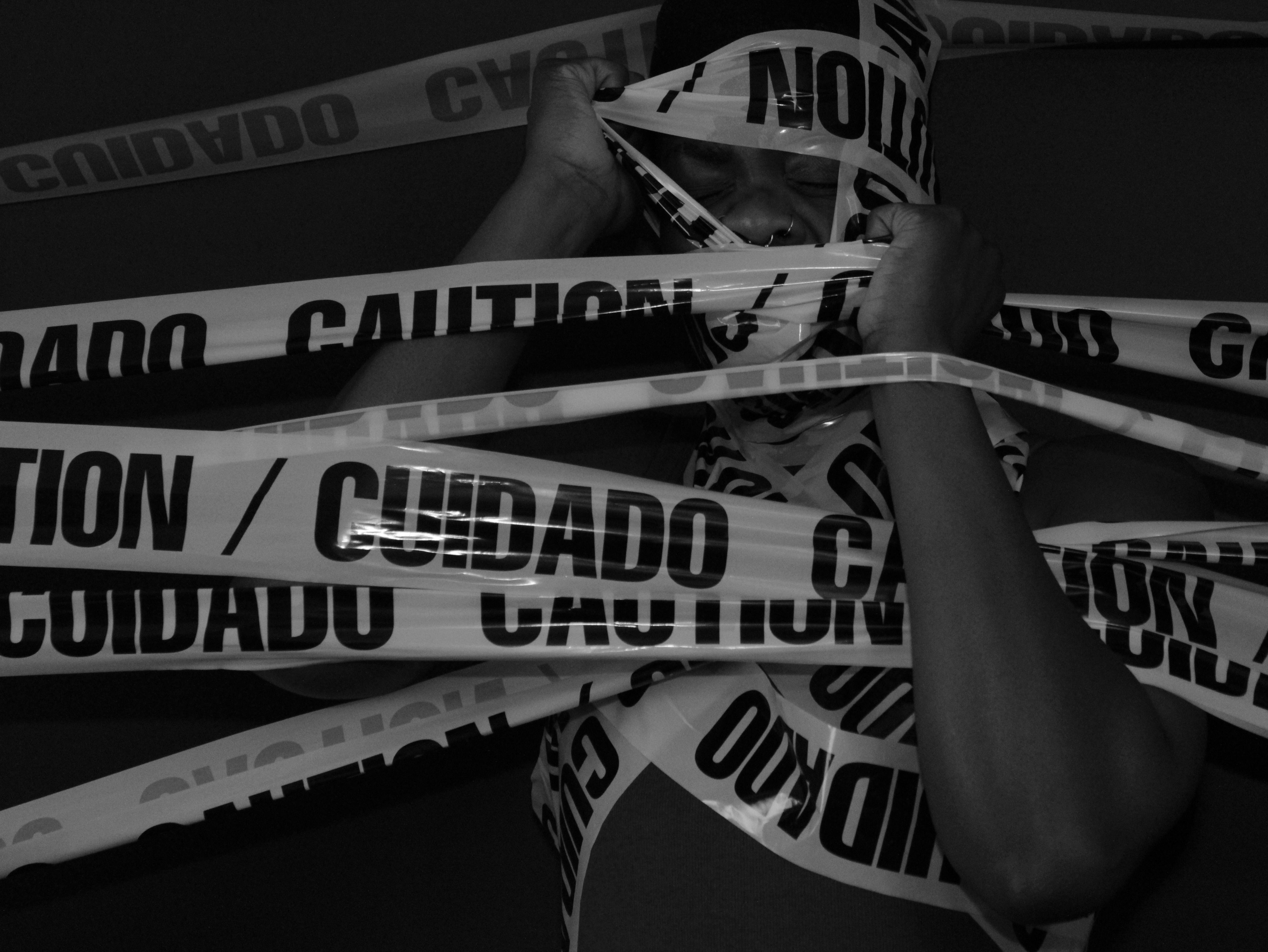
The truth lay there on the asphalt, sealed off by yellow tape.
Bodies shatter like dropped mirrors. Too often, their stories remain in pieces—crimes unsolved, justice crumbling like old mortar. Corners get cut, evidence goes missing, confessions get coaxed from silence.
“Rules bend like green branches,” my father said. “They’re never strong enough to hold people when they break.”
That autumn, he left the force. Gun locked away. Badge abandoned on the kitchen counter.
Its weight pressed into my chest like a stone.
My father started walking every night after that. Said he was going to return something. But he never carried anything—except maybe the ghost weight of that badge. Sometimes I’d catch him staring into the mailbox as if it might confess: the boy shot outside a liquor store, the woman who vanished from the bus stop, the neighbor’s son folded into a body bag after a party turned raid. Names he didn’t say, yet they settled in him, stubborn and insistent, tracing the contours of his silence.
His eyes fogged over with cataracts that year. Could he still see clearly? Or had twenty years of case files and bodies already blurred his view?
I learned to live in the space between breaths, resisting the rush toward endings. After the breaking—the fall from the building, the silence that followed, the fractures inside our house—light still filtered through like morning through gauze. Heartache and shame accumulated, sharp as glass shards in my palm.
Bleed if you must, I told myself. But don’t let go. Save yourself.
The world outside mirrored our collapse. Children carried toy guns, sometimes real ones. In American suburbs, schools locked down after whispers of shootings. Mothers circled like helicopters, desperate to keep the danger away. On television, buildings burned in Ciudad Juárez while kids ran toward the flames as if chasing light. Police barricades rose, yet looters still filled their pockets with stolen candy.
The dispatchers kept asking: "Gun?"
"Yes."
At home, candles replaced the bulbs we couldn't afford. Wax pooled like tears across the table. I wished my father were there to steady the air, but he stayed elsewhere—gone from the house most nights, moving through silence like it was an unpaid debt.
That was the season everything began to fracture. The storm came not from the sky, but from everything breaking at once: old routines collapsing, unspoken words rising like tides, the tension between us snapping like a wire under pressure.
In the midst of it all, I discovered an idea—small, stubborn, and urgent. It was a refuge I could shape with my own hands: a sanctuary for the self, for the body, and all the pieces that had been stretched thin. I imagined it like a house of light inside me, walls made of thought and breath, a place to hide and breathe, to mend and gather strength. It shimmered stubborn and alive, as malleable as gold in a smith's hands.
One shard of that vision carried me across an ocean on Delta wings toward a city with an apple heart, its subway trains pulsing like arteries. I ate street food that tasted like home and distance at once. Wind shivered across the river. Catalpa blossoms thickened the air until I could taste their sweetness on my tongue. I told myself: breathe.
But even there, across oceans, I still heard him—my father's voice carried in memory, threaded with the wild cries of birds. Longing and unease tangled in the sound, and I couldn't tell which was stronger.
At night, I returned to the old soundscape I had pieced together as a child: recordings of the Mariana Trench, groans and moans from the ocean floor, layered with the low hum of our house when my father wasn't home. I had scavenged the sounds from library archives, late-night radio, and clunky cassette players, drawn to how distant pressure and echo mirrored the tension I carried inside. Listening became both ritual and experiment: a way to feel the vastness of the world and the smallness of myself, all at once.
Once, when I was young, my father stood beside me as those sounds filled the room through the old cassette player. His skin smelled of peppermint soap and exhaustion.
"What is that?" he asked.
"Ships groaning. Whales singing. Earth's plates grinding together."
"Sounds like outer space in the movies."
"Close enough. You sad?" I asked.
He only said: "Even eleven miles deep, and there's still noise."
Dogmas crumbled around me, heavy as stones I couldn't lift, even after I moved to Mexico. One brick at a time, the dust of old beliefs settled in my lungs, gritty and inescapable.
The streets stayed the same shade of opaque, indifferent to my reckoning. I searched for something unbroken: in ivy climbing over ruins, in the pulse of my father's blood inside my own.
The past fractured in my chest like ice breaking on a river. Blood spatters echoed along memory's corridors. Dispatcher voices looped in my mind. Peppermint soap burned my nostrils. Over and over, I heard the sound of bodies falling, the sharp clatter of badges on concrete—moments remembered, not repeated, cold as winter.
Catalpa scent sliced the air, sharp enough to pierce the throat.
Survive. Bear witness. Feel everything, all at once, skin electric with sensation. Origami of grief folding over itself: mine, his, ours: the weight of memory and blood, tangled together. Fuera del tiempo, pero dentro de la herida luminosa. A void outside time, beyond the reach of certainty, where individual and collective pain blur, where I hold the world's fractures in my own chest.
Years later: corneal transplants. A clear fragment of a dead child's eye sewn into my father's iris. He looked up more after that surgery—never for God, never for the sky's promise—but to let the broken world pour in through his borrowed sight.
Light finds a way through the smallest cracks. Bodies shatter like dropped porcelain. Justice shatters.
Everything breaks. And everything lets light in through the fractures, through the wounds that refuse to heal.
Marie Anne Arreola is a bilingual poet and editor whose work lives at the intersection of speculative lyric, digital culture, and diaspora memory. She is the author of Sparks of the Liberating Spirit Who Trapped Us (Foreshore Publishing, UK) and founding editor of VOCES, a bilingual platform for global artists and writers. Her work appears in journals across the U.S., Europe, and Latin America. She is a two-time finalist for the Francisco Ruiz Udiel Latin American Poetry Prize (V and VI editions) from Valparaíso Ediciones, and a recipient of the 2024 Young Poets Scholarship awarded by the Gutiérrez Lozano Foundation.

Inglenook Lit is an online literary magazine for magic enthusiasts and enchantment seekers
Copyright © 2021-2026
Inglenook Lit LLC

