Do you love magic, but don’t typically read fantasy? Fantasy isn’t everyone’s favorite genre, but the presence of magic in a book isn’t the genre-defining trait it once was. Literature-lovers rejoice: there’s enchantment to be found in the everyday world (of fiction). Ghosts, curses, and unexplainable encounters have found their way into literary fiction, allowing authors to explore trauma and prejudice in new, unconventional ways and create uniquely impactful stories. You’ll recognize the worlds the characters of these novels inhabit, but be charmed and enchanted out of your own. Here are some of the best books using magic to explore the world and its many lived experiences, from classics to new releases.
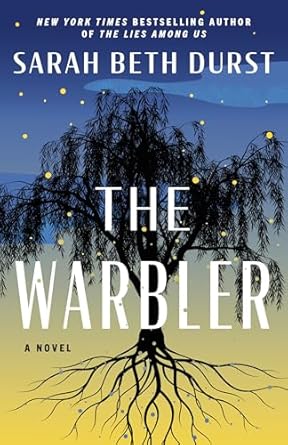
Already an established name in children’s and young adult publishing, Durst has entered literary fiction with enviable elegance. The Warbler uses its speculative elements and its three protagonists to explore women’s inner lives and intergenerational relationships. “In turns sinister and heartfelt, The Warbler is a tale of bravery in facing supernatural and wholly human adversity,” (TBR Newsmedia). The story follows Elisa, afraid to stay in one place for too long because of a family curse that will turn her into a tree.

“An ambitious first novel whose intriguing parts never fully come together into a satisfying whole,” (Kirkus). Yet its lack of a satisfying end conveys an unfortunate truth about lives of the indigenous people at the center of this novel. Grief also plays an important role in this text as the protagonist, Damien, struggles to grapple with the recent loss of his brother. Diné myths, realities, and food are all central to this incredible book and the mystery at the heart of its complex, character-driven plot.

“The protagonist of Rivers Solomon’s novel“Model Home” has tried to outrun childhood trauma, but their ghosts lure them right back,” (NYT). With clear inspiration taken from authors Octavia Butler and Toni Morrison, Model Home tackles topics like racism, gender identity, and generational trauma using classic haunted house tropes, while still subverting reader expectations for the genre. Their narrative is slow, building dread with the deliberate, debilitating care that readers have come to expect from Solomon’s work.

Weaving everything from spy tactics to time travel to her master’s degree in biology into the narrative, Gelfuso creates an exciting tale inspired by books like The Midnight Library and The Ministry of Time. “By centering the stories in the days of World War II and the height of McCarthyism during the Cold War, the author cleverly uses the general knowledge of history inherent in her audience to ground the narrative,” (FFA). With two incredible female narrators, interconnected storylines, a library full of memories, and a clear, anti-revisionist message,The Book of Lost Hours delivers on everything its synopsis promises.

Departing just slightly from fantasy to venture into the world of speculative science fiction, Foster’s debut novel explores themes of control, society, and their rapid dissolution. Named one of the best books of the year by The Guardian, this rollercoaster of a novel uses alternate perspectives in a world of the near future to remind us that we aren’t spinning out of control, the entire world is, which only makes living that much harder. “Foster doesn’t rest on his fun and original ideas; he nurtures them, cultivates them with thoughtful challenges and unexpected turns, until out of them emerge new ideas, complicated and earned,” (WP).

As one of the most highly-anticipated independent titles of the year, “…The Sofa weaves the reader into its very fabric. It is consuming, so the reader is consumed at the same rate as Montessori. It’s a blessing that The Sofa can be devoured in a sitting or two. Otherwise many more readers might lose their minds,” (IBR). Through the surreal and the strange, Munson breaks the literal space of the home down to its most fundamental elements, asking the question: what do we do when we no longer recognize our most private spaces?

What does a love affair in a war zone need? Doors. Not just any doors, but magic portals that can whisk people to other countries, presumably to safety, and a better life–even if that means leaving behind one’s entire family. The threat of danger is always prevalent in Exit West, but our eye is always on how the characters will find their feet and invent a new sense of self. Surreal, magical, captivating, Hamid’s fiction “captures the global perils percolating beneath today’s headlines, while at the same time painting an unnervingly dystopian portrait of what might lie down the road” (NYT). That review was written in 2017. Sadly, it continues to resonate.

An epic, layered myth with enchanting world-building that’s about world-building itself. In response to war and corruption, a goddess-channeling girl attempts to build a better empire in southern India. “A grand entertainment, in a tale with many strands, by an ascended master of modern legends,” (Kirkus), this read is equal parts magical and historic, mythological catharsis for the politically and liberal minded.

Finally, an original fairy tale for grown-ups! “Dark academia” meets Jules Verne with a dusting of Austen-esque romance in this journey to the far north, where our namesake protagonist seeks to complete her ground-breaking research on the fae. Set in the past but freshly modern, this read is full of wonder and dry wit. Other reviews claim that the read is too dry, too academic, and that the characters are flat, the romance unsatisfying. They’re missing the point: this isn’t so much about two professors, or the tight-knit Scandinavian village they grow to love; as it’s about MAGIC. The fae are the focus, and how they overlap with the human world. You’ll be whisked away into a fantasy, bolstered by the novel’s intellectual center.

Though nearly two decades old, Susanna Clarke’s novel remains a classic in literary magic, what Neil Gaiman called “the finest English novel of the fantastic written in the last seventy years” (Washington Post), which, if he still agrees with his assessment, would make it the finest in the last 90 years. In case you’ve been living under a rock: the story is set in England in the early 1800’s during the Napoleonic War. Two magicians rise to fame, a fusty magician-scholar-bibliophile and a dashing, entrepreneurial showman. Their rivalry is a clash of ideologies that can either help or hinder their country. Though rife with magic–faeries, incantations, spell books–Clarke’s novel has the heft and authority of a historical account. If there are any magic-loving academics / anglophiles / fans of Austen-esque prose out there who haven’t read Jonathan Strange and Mr. Norrell, clear your reading list and get yourself a copy.

Inglenook Lit is an online literary magazine for magic enthusiasts and enchantment seekers
Copyright © 2021-2026
Inglenook Lit LLC

