***
The first time the rehearsal room changed, I thought I had simply played well. That it was my doing.
That is how magic enters most lives: disguised as competence, as timing, as the ordinary luck of sounding like yourself in the right place at the right time.
We were in rehearsal, deep in Elgar’s Nimrod. The music hall smelled faintly of rosin and old varnish, the kind of building that has held too many endings and learned, over time, to keep a little of each one.
The conductor had lifted her hands. She had the kind of stillness that made everyone else feel slightly unfinished, as if we were all still becoming ourselves and she had already arrived. When she gave the downbeat, the strings entered like breath returning to a body. I raised my flute and played.
The note came out softer than intended, but softness in Nimrod is not a mistake. It is the point. The piece does not announce itself. It opens. It widens. It asks the room to believe in continuation. And the room did.
That was when I saw it: a thread.
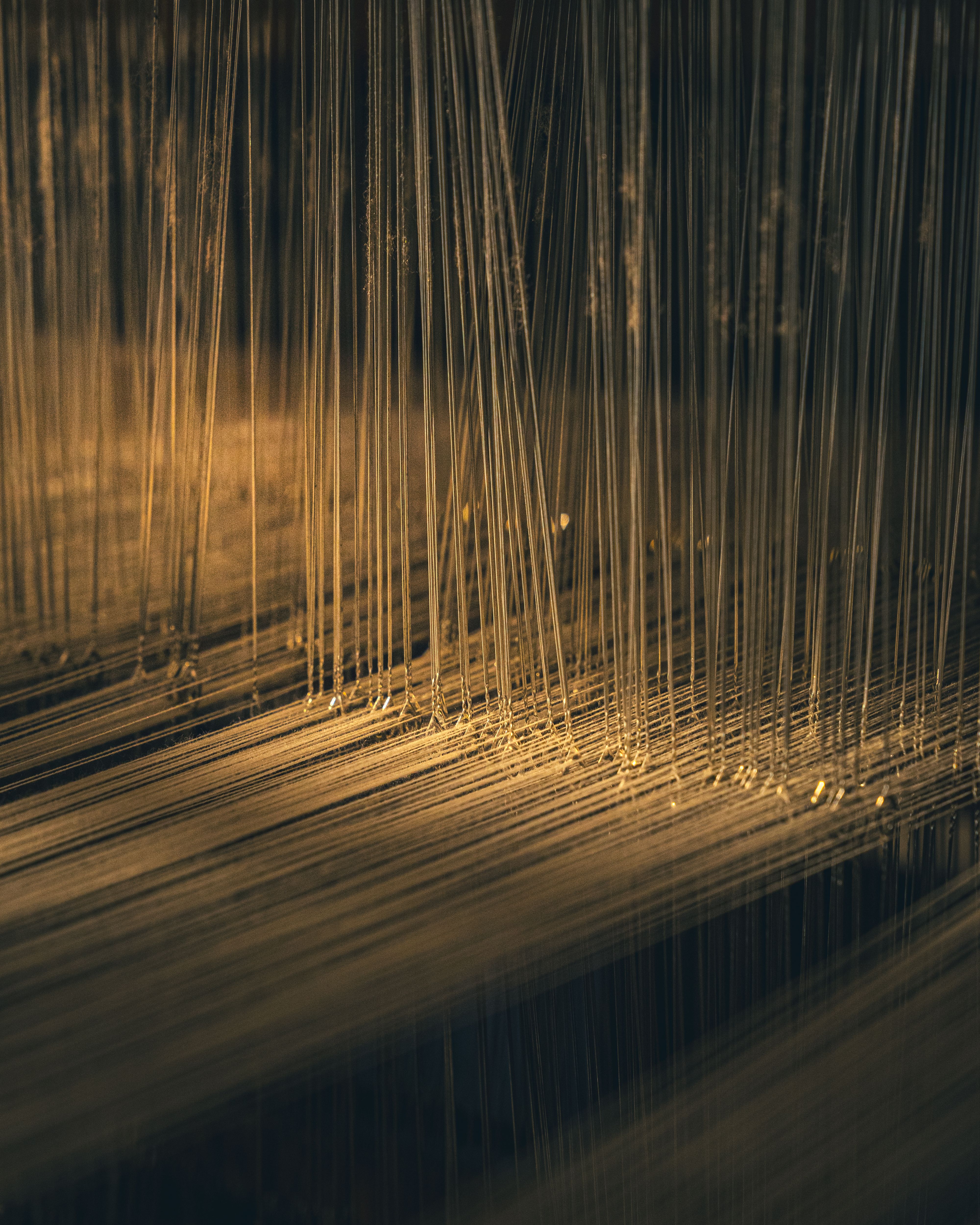
It wasn’t visible in any ordinary sense. It was what air looks like after it has agreed to belong to everyone at once. It shimmered like gold above the sound—thin, luminous, almost embarrassed to be noticed. A filament of shared attention. A strand of collective breath.
That was the first thing I learned: the room could become one thing. Not metaphorically. Actually one thing. A shared pulse. A held breath. A single listening body made of strangers.
I nearly missed my next entrance because my entire body went hot with recognition. No one else reacted. That, too, felt like part of the spell.
After rehearsal, I walked home with my flute case knocking gently against my leg, still feeling the echo of it. Not the music exactly—the after of the music. The way the room had stayed one thing for a few seconds longer than it had any practical right to.
I should have forgotten it. Instead, I began to crave it. More than anyone had a right to.
**
The trumpet player always held the mute in one hand when rehearsal broke, as if they had not yet been told whether to soften or speak. When they looked at me across the rows, it was with that same unfinished expectancy.
That was their gift. And also their liability.
They watched everything as if it mattered—personally, immediately, as a moral fact. As if nothing could be safely ignored without becoming a small betrayal. When they played, they didn’t just enter the texture of the orchestra; they insisted on being present inside it. On being heard as themselves, not as part of a section. And they insisted on hearing others the same way.
They watched me across rehearsals as if trying to confirm I was still there. As if people had a habit of going elsewhere without warning.
I should have found it flattering. Grounding. Instead, it felt like being tugged back from somewhere I wanted to stay—that dissolving place between notes where no one is separate.
I wanted to lay claim to the room, to the threads in the air, more than I wanted any single person inside it.
**
The conductor did not feel like a person in the way the trumpet player did. She felt like a function of coherence. When she shaped Nimrod, it felt inevitable, as if the music had always been waiting for someone to arrange it correctly. Her hands did not express emotion: they organized possibility.
The trumpet player was transfixed by her. It was obvious, though never named.
They’d play a phrase beautifully and then glance—just briefly—at the conductor. Not for musical guidance. They watched her with the stillness of someone listening for a verdict. Confirmation that what they’d felt was real. Every cue seemed to strike the trumpet player twice: first as music, then as instruction for how to be.
Someone had taught them to do that. To check.
They seemed to shrink slightly every time her baton moved on without acknowledging them. As if each uncollected glance confirmed something they already feared was true.
She was an extraordinary conductor. That wasn’t the problem.
The problem was that the trumpet player looked for something inside that precision. Something that had nothing to do with music.
**
The Collector appeared during the third rehearsal. He stood near the back wall where the light had given up. I noticed him because he was not looking at us. He was looking at what existed between us—the space, the thread, the thing I had no name for yet. After the rehearsal ended, he waited outside.
“You saw it,” he said to me.
“The thread?” I asked before I could stop myself.
He smiled. That was the moment the story stopped belonging only to music.
“It’s just the room,” I said. “The acoustics.”
“No,” he replied gently. “It’s what the room becomes when people stop performing and start listening. When they give something real.”
I should have walked away. Instead, I stayed.
“Most people waste it,” he said. “They let it dissolve.”
“What do you do?” I asked.
“I keep it.”
“For what?”
His eyes moved toward the darkened hall. “For use.” There was no threat in his voice. Only stewardship. The absolute calm of someone who has decided, long ago, that they know best what beautiful things are for.
That was when I felt it—not fear exactly. Recognition.
I had heard this logic before. Not here. Not about music. But I knew its shape: the way it dressed itself in care, in purpose, in the language of preservation.
The way it made you feel, briefly, that being seen by it was a kind of gift.
The trumpet player was still inside, playing a phrase over and over. Getting it right. Checking.
**
The first time the Collector took a thread, I almost missed it.
We were in the long opening of Nimrod, where everything depends on patience. The conductor lifted her hands and the room obeyed. The strings widened. The trumpet entered like a question that had been waiting too long to be asked.
The thread shivered into being—not above us, but out of us. Out of shared attention. Out of the exact moment where we stopped being individuals and became duration.
At the back of the hall, the Collector lifted his hand.
The thread went with him.
The music continued. That was the strangest part. Nothing broke. Nothing announced itself as loss.
Only afterward did I notice what had changed. The applause was correct, but thinner. The silence afterward did not linger. People left too cleanly, like pages turned without residue.
The trumpet player found me after.
“You felt that too,” they said. It was not a question.
“Yes,” I said.
Their face tightened. “Something’s wrong with the ending.”
I almost laughed. Because yes. Something was wrong.
**
The trumpet player began to watch the conductor more closely after that. Not just admiration—fixation. They followed her gestures like scripture, studied the angle of her wrists, the timing of her breath before a cue. They watched her the way you watch weather. Not because you expect rain. Because you remember the pressure of it in the body.
I watched it happen with a kind of quiet ache I didn’t know where to place.
Because the trumpet player never looked at me like that. Like I was someone they longed to reach.
**
The Collector became easier to see after that. Not because he changed, but because I did.
Once you know something can be taken, you begin to see the taking everywhere.
He spoke again in the corridor later. “You could help me,” he said.
“I don’t help thieves.”
“I preserve what you cannot keep on your own.”
“That’s not preservation,” I said. “That’s extraction.”
He tilted his head. “Beauty is useless if left to dissolve.”
It was not a threat. Only cold fact—and inside it, a bargain.
**
The final rehearsal felt like a storm deciding whether or not to arrive. The conductor lifted her hands.
The trumpet player watched her like she was the only stable thing in the room. I watched them watching her— hat particular hunger, that old habit of looking outward for confirmation of what was already true inside them.
I watched the space between us all.
And I understood something I had been circling for weeks: the thread appeared only when no one was pleading for it, when attention simply rested where it was.
The music began. The thread appeared—thin, luminous, rising out of the room’s shared breath. The Collector, at the back wall, lifted his hand.
And I understood the magic then. Possession makes a thing nameable, singular.
In that way, it can be lost.
So I did the opposite of holding on. I played my phrase and let it go outward—not up, not toward him, but sideways into the room, into the breath of the person beside me and the person beside them.
I didn’t try to make the thread mine. I didn’t try to keep it from leaving.
I tried to make it impossible to locate.
The thread didn’t dissolve. It multiplied.
It fractured into many thin lines, one for each listener, woven between us like something structural—a safety net, a web of held attention. Not one golden strand but a whole cloth, without edges to grab. Uncollectable. Unnameable.
The Collector reached and found nothing singular to grasp.
For the first time, he looked unsure. How do you take something that no longer exists in one place? How do you put your name on what belongs, equally, to everyone in the room?
The trumpet player was crying quietly—not from sadness, but from recognition. The kind of crying that means: I didn’t know I needed this.
The Collector hesitated.
Then he was gone.
**
Afterward, the trumpet player found me outside. They were shaking slightly, but not from the cold. “I think I’ve been looking for the wrong thing,” they said.
I didn’t ask what they meant. I had done the same. I had longed for the threads. I had loved that feeling more than I had let myself love the trumpet player.
I hadn’t said so. I hadn’t said much of anything, across all those rehearsals. I had watched them with the same hunger I brought to the thread—wanting them the way you want something you’ve decided is just out of reach. It was safer that way. Wanting from a distance has its own kind of beauty. Its own kind of cowardice.
“Yeah,” I said. Just that.
They looked at me—really looked, the way they looked at everything, as if it mattered directly and personally and right now. And for once I didn’t drift, didn’t look for threads in the air. I stayed with their gaze.
We stood there in the cold for a while, not saying anything.
**
That night, I returned to the music hall alone. No audience. No conductor. No trumpet player watching the space between my notes. I lifted my flute and played Nimrod into the empty hall.
And the room still listened.
The thread appeared, but differently. Quieter. It rose and spread and did not ask to be held.
I lowered the instrument and let the silence settle.
The thread was never the prize. The room could open without belonging to me, because belonging was plural. A beautiful thing, passing through like music.
Ellis Ash is a musician and music educator in Connecticut, where she teaches in public schools and universities, and performs with regional theater and performance ensembles. Her creative work explores the intersections of music, poetry, and philosophical themes of gender and relationality.

Inglenook Lit is an online literary magazine for magic enthusiasts and enchantment seekers
Copyright © 2021-2026
Inglenook Lit LLC

