
Somewhere between the genres of speculative fiction, science fiction, and fantasy—whose differences often come down to publishing goals—lies the subgenre of “romantasy,” which has been enjoying quite a lot of popularity recently. Despite the explosion of consumer interest, criticisms of romantasy abound, and are frequently mixed with a misogynistic dislike of women’s fantasies, a dislike as old as the romance novel genre itself. To distinguish valid literary criticism from misogynistic reactionaries, we can turn to the writings of speculative fiction giant Ursula K. Le Guin.
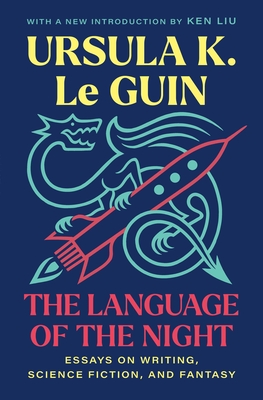
Le Guin wrote essays, articles, and speeches on the craft and industry of speculative fiction. While she may not have lived to see romantasy’s explosive arrival to the market, her book, The Language of the Night, is particularly interesting for its modern-day relevance. In the book, Le Guin makes clear that she would expect a higher standard of work from romantasy publishers, readers, and writers alike.
The uphill journey to publication and recognition within the book industry has been a challenge for every young, speculative writer, and Le Guin was no exception. Drawing on her own experience, Le Guin warns in her essay “A Citizen of Mondath,” that aspiring authors “…must either fit in a category or ‘have a name’ to publish a book in America.”
When applying this idea to the romantasy genre, it suggests that ambitious, young writers looking to get published may shoehorn their ideas into the tropes and conventions of romantasy to the detriment of their novel. This phenomenon is exacerbated by the intense demand for romantasy titles as publishers compete to release the next Fourth Wing or A Court of Thorns and Roses by publishing numerous books with comparable stories, characters, and covers.
The result, as Le Guin puts it, is talented writers “…content to stay within the safe parameters of the predictable…taking no risks and going no where we haven’t all been before.”
This critique is a common complaint of romantasy. Many of the titles rely so heavily on tropes to sell the book that the story suffers. For large, traditional publishers, romantasy titles aren’t creative ventures, but high-yield investments. What these rushed romantasy titles lack in original storytelling, they compensate for with product marketing: beautiful covers, sprayed edges, and collectible sets, all of which come at a premium price.
“The responsibility for the genre’s high demand and low standards rests with readers as well as publishing houses.”
This complete commercialization of the creative process was in Le Guin’s mind as she wrote the preface to The Language of the Night’s 1989 reprint: “Competition for big advances, the bestseller mentality, a kind of degraded professionalism, the reduction of book to product or commodity, the replacement of editors by PR teams, has demoralized many writers in the past decade.”
While the publishers may push to raise romantasy’s profitability, they’re ultimately responding to reader interest and engagement. Thus, the responsibility for the genre’s high demand and low standards rests with readers as well as publishing houses.
Le Guin discusses readers’ genre-loyalty throughout her essays, though she used “science fiction” to cover the broad range encompassed by speculative work. In her opinion, “Second-rate stuff will be bought just as fast, maybe faster sometimes, by the publishers and the fans will buy it because it is science fiction.”
She goes on to argue that blind love of a genre with no regard for the quality of the book feeds a pernicious, short-lived cycle. Stating that so long as a book is in the genre they crave, “…the fans will love it—briefly; therefore the publishers will put it in print—briefly; therefore the writer is likely to settle for doing much less than her best.”
The lack of quality writing in speculative subgenres is only furthered, Le Guin continues, by their segregation from so-called “literary” titles in reviews, awards, and journals discussing new releases.
“The Canoneers of Literature,” she writes in her preface, “still refuse to admit that genrefication is a political tactic and that the type of fiction they distinguish as serious, mainstream, literary, etc., is itself a genre without inherent superiority to any other.”
If the whole of speculative fiction is done a disservice by this segregation, then romantasy suffers the same fate by isolating itself from other speculative work, hiding inside science fiction and fantasy like a nesting doll. Often, this segregation is as enforced by romantasy fans through their genre-loyalty, reinforcing the stance of literary gatekeepers.
By isolating themselves from other speculative titles in their own corner of the literary space, self-professed “romantasy girlies” limit their opportunities to explore and imagine. They accept the books they read as products, instead of engaging, well-crafted stories. They accept the label of “unserious” that many critics use to dismiss romantasy’s dominance by not demanding new, original stories.
It’s not a coincidence that the vast majority of romantasy writers and readers are women. The segregation and subsequent devaluation of romantasy is a convenient means by which publishers, without ever intending to, can deride women’s imaginations.
In a near-ironic, unknowing reference to the now-popular subgenre of “cozy fantasy,” Le Guin calls the self-denigration of women’s speculative writing “cozy misogyny”. She viewed female, speculative authors like Margaret Atwood, Doris Lessing, and herself as less bound by the traditional conventions of “literary merit” because they were women and thus already prepared for their work to be devalued by the industry.
Speculative readers and writers alike similarly limit the acclaim of their favored genre by refusing to recognize fantastical literary movements outside the United States and United Kingdom. Le Guin counted the rise of South American magical realists as “a great cognate movement” to the wave of acclaimed female science fiction authors of the 1970s. The inability of speculative fiction fans to recognize themselves in literary movements was particularly troublesome to Le Guin, who deemed it “a failure of self-respect.”
In dismissing the literary movements that contextualize trends like romantasy, Le Guin argues that readers and writers alike give in to “an assumption that [speculative] fiction has only commercial value and is artistically a dead end.”
The only solution, according to Le Guin, is “some genuine, serious, literate criticism: some standards.”
While editors, readers, and reviewers contribute to those standards, the largest share of responsibility lies with the readers, and to some degree, the writers of romantasy books. When the industry is eager to snap up and publish any manuscript that fits within the narrow confines of the genre, “…Only the writer’s conscience remains to insist that she try not to be second-rate. Nobody else seems much to care.” Consumers, hungry for more reads, contribute to a rushed, over-saturated market where quality takes a backseat to quantity. Le Guin’s criticisms are strongly-worded, but they ultimately boil down to one unifying idea: slow down!
Savor your next romantasy read. Don’t worry about what’s new or trending. Feed your voracious reading appetite with an older book. Romantasy has its roots in the work of romantic fantasy authors of the 90s and early 2000s. Authors like Anne McCaffrey and Anne Bishop are inspirations for the popular series of today, so give their dragons and fae a try! You and your bookshelf can only benefit.
Claire van Doren holds degrees in English literature and journalism as well as a certificate in LGBTQ+ studies from Arizona State University. She is a volunteer reader for Uncharted magazine, a publisher of genre fiction. Her writing has been published by Inner Worlds, Zocalo Public Square, and ASU News.

Inglenook Lit is an online literary magazine for magic enthusiasts and enchantment seekers
Copyright © 2021-2026
Inglenook Lit LLC

