
As long as I can remember, I’ve been curious about fairies—faeries? Fae? (How do we address those tiny winged beings? Are they in fact winged? Tiny? Real?)
Part of the draw for me is the mystery, which has followed fairies across the generations. As Jonny Dillon, archivist of the National Folklore Collection at the University College of Dublin, puts it in Orion, fairies are “an unsettling, strange presence that’s just always around the corner. And so you don’t quite know who you’re talking to anymore. Or you don’t quite know where you are. Things are not as they seem” (Middleton).

In writing Modern Fairy Sightings: Personal Encounters in Extraordinary Times, folklore researcher Jo Hickey-Hall describes the process of writing about the otherworldly as slippery. “It’s always slightly out of your grasp,” she explains in an interview with me. “Fairies are anti-bureaucracy by their very nature. You can’t compartmentalize them.” For Drs. Brittany Warman and Sara Cleto of the Carterhaugh School of Folklore and the Fantastic, fairies are “supernatural creatures most likely to mess with humans.” And they’re not always tiny. Often, they’re not even winged.
The question of whether they’re real is a moot point. In our chat over Zoom, Sara and Brittany pointed out that the job of folklorists studying faerie sightings is to document, which is a rational response to experience. The question is not, are faeries real? but what does their continued existence in our culture mean? For those who’ve had real-life sightings and inexplicable experiences, such as the stories recorded on Jo Hickey-Hall’s Modern Fairy Sightings Podcast, faeries are a reality whether they square with logic or not.
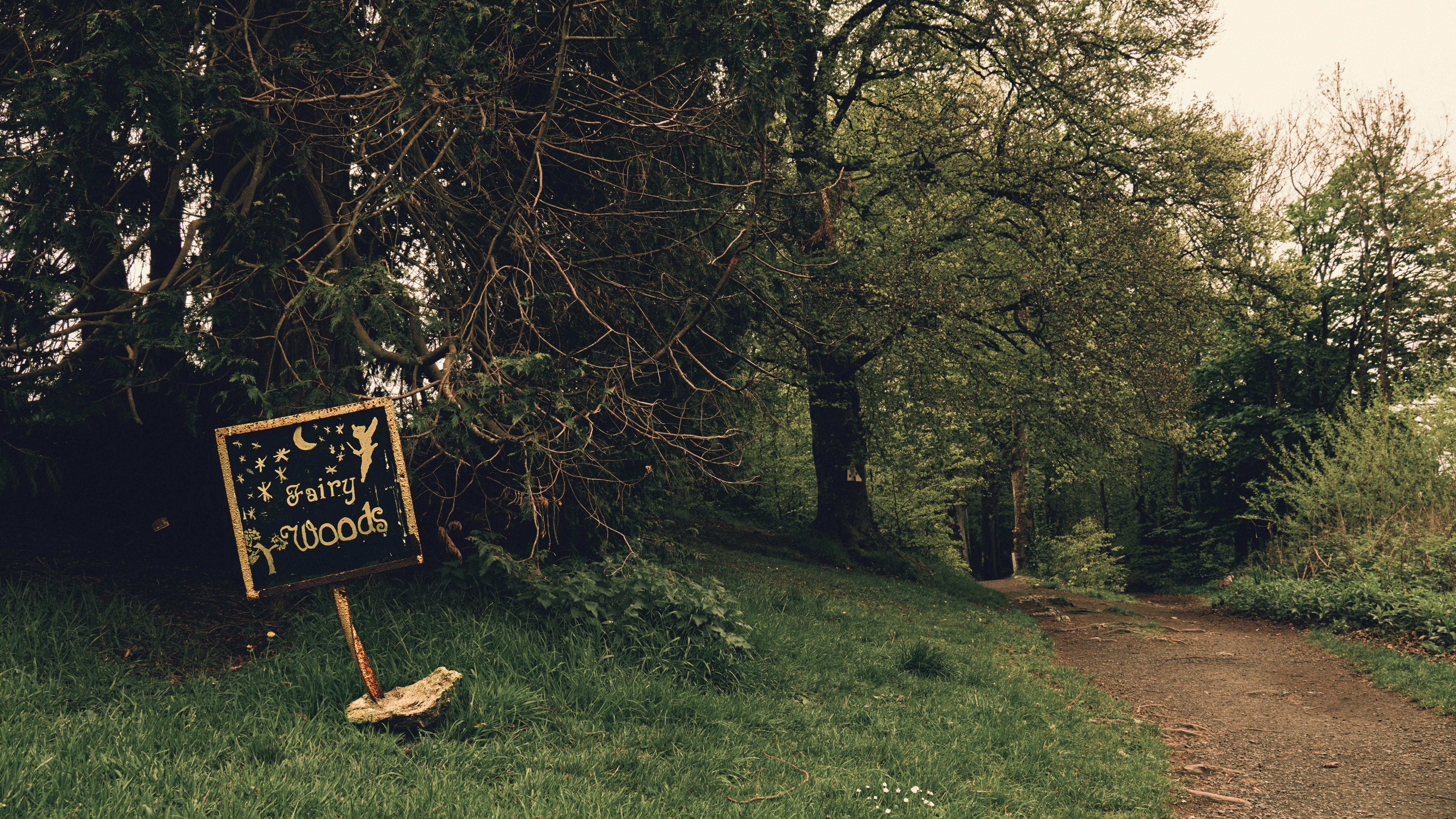
In some parts of the world, fairies are an accepted, undeniable part of culture. In Ireland, fairies are respected, or at least given a wide berth. Natalie Middleton warns that fairies of the Irish folk tradition are better off not even being named aloud, and trees said to be faery homes should be left alone. One must never cut down a lone Hawthorn. The original source for this information was probably my mother, though I don’t remember, just as I don’t remember a time when I didn’t know how to tie my shoes or brush my teeth. I can’t remember not knowing about fairy trees, and I’m not even Irish—just a child of an unusually mystical upbringing. In “Western” cultures like mine, fairies are more often the stuff of nail polish shades, TV shows, and toys: sprites of imagination and myth. Science is king, and faeries aren’t part of the kingdom. But Dr. Brittany Warman will be the first to remind us that recording stories is what’s important, not scientific reasoning.
Fairylore is one such record: a beautifully illustrated, scholarly, but approachable guide. In this compendium, authors Sara and Brittany wanted to fill in the gaps of what’s missing. Some books categorize otherworldly beings alphabetically, while others do so by region, with an unbalanced representation of certain countries, especially Ireland. Fairylore categorizes fairies by how they relate to humans: a relationship-based record, looking at beings of the home, of terror, of seduction, of nature. Each section ends with a story, either from legend or literature. And you might be surprised by them. “If you look at the oldest stories about fairies,” said Sara, “They’re bastions of order and rule following. Nowadays we don’t associate them with that. We think of them as subversive and free, creatures that represent magic and hope and daring. But older stories don’t support that. In folklore, fairies were socially conservative, keepers of the status quo.” This further demonstrates fairies’ role in our culture. We seem to need them to be symbols of rebellion and rule-breaking, or failing that, hope.
For Jo Hickey-Hall, the why of fairy encounters is what’s most compelling. “At first I wanted my book to be about the proximity of fairies to us, but now the book is more about why we’re having these experiences.” Jo’s research into present-day fairy lore began with a Facebook group in 2016, a safe space for people to share their stories and exchange ideas. Her podcast Modern Fairy Sightings grew out of this, beginning with anonymous audio interviews. “People were still quite tentative about talking about their experiences in those days.” Jo herself found it challenging to talk about her encounters. Many of her podcast’s episodes explore this common memory lapse issue, how easy it is to sweep aside and “forget” an otherworldly encounter, and how difficult it can be to open it back up again. Part of the obstacle is cultural stigma and shame, but some part of it is perhaps due to cognitive gymnastics, the mind’s inability to contextualize. In the face of the inexplicable, it’s easier to “forget,” let things slide, rather than get curious and lean into uncertainty.
These days, though, people are happy to go on screen with Jo and share their names and stories, which is a real change. This is perhaps due to early Covid days, when people were forced to pause their normal routines and disconnect from routines. “It was a potent patch of time, when things came through the seams, allowing us to recalibrate.” Jo noticed an uptick in stories during lockdown. Fairy encounters seem to have a link to changes in people’s lives, “rites of passage, if you will. And we’re all at a juncture at this time.”
From historical to modern-day lore, fairies have enjoyed a several-thousand-year human fascination, since at least 1330 (Cleto and Warman 14). To quote Fairylore:
“From the beginning, ‘fairy’ has meant many different things: quality, place, creature. ‘Fairy’ has always held the vastness of the human imagination. […] [T]he single word “fairy” has meant a lot of different things to different people” (14-16).
Faerie refers to both being and place: “You were described as being ‘in Faerie’ if you encountered the enchantment spun by otherworldly beings,” says Jo, who tends to use the term “otherworldly beings.” Mostly, she lets her storytellers take the lead on language. “People make sense of these beings in their own way.”
How we address otherworldly beings is personal, but perhaps Fairylore and Modern Fairy Sightings can help make the Otherworld(s) more universal, opening the seams of reality a bit more. I, for one, wouldn’t mind more Faerie in my life, even if that means more mischief. Maybe humans could do with a bit more fairies “messing with them” to contextualize our own messes, and the harm we do to one another. If that’s the case, I’ll happily roll out the welcome mat.
Sasha Bailyn is the Editor-in-Chief of Inglenook Lit and an author of creative nonfiction and fiction. A Bay Area native, Sasha always finds herself in the trees and close to water. She lives in Long Island with her dog familiars and human family.

Inglenook Lit is an online literary magazine for magic enthusiasts and enchantment seekers
Copyright © 2021-2026
Inglenook Lit LLC

