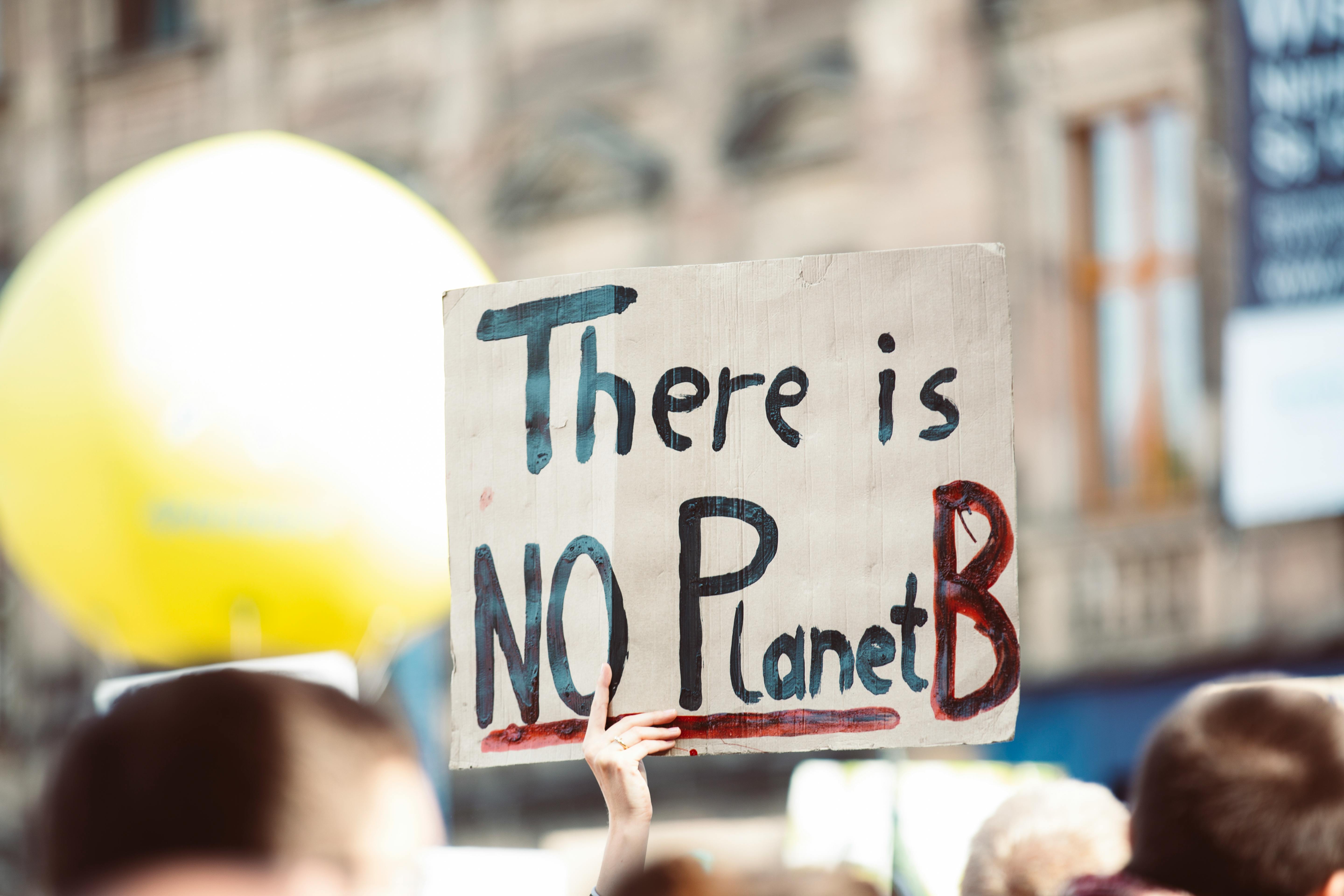
When looking at the effect of human dominion over the past five centuries, it seems there is no question that Earth’s plight is a crisis of self-destructive anthropocentrism. Philosopher Donna Haraway, in her book Staying with the Trouble, urges us to imagine a world without the human at the center, a world where the human exists among—not above—the troubles that nature brings. She looks toward “SF” (speculative fiction, science fact, etc) as a useful tool to navigate what this alternate reality might look like. She writes, “[SF] is a method of tracing, of following a thread in the dark, in a dangerous true tale of adventure, where who lives and who dies and how might become clearer for the cultivating of multispecies justice.”[1]
But while many often think of science fiction as the realm where humanity’s self-centeredness and brutality are revealed, magical realism might be the genre that best reveals our capacity to integrate with the natural world. Bruno Latour, another advocate of post-humanism, points to our narrow-minded perspective; in Facing Gaia, he writes, “No one has ever lived ‘in Nature.”[2] We can look to magical realist writers like Sheila Heti to approximate what living “in Nature” might look like.

Heti’s novel Pure Colour, a critique and celebration of the human condition, takes an unexpected turn when an art critic-in-training, Mira, is transformed into a leaf on a tree. Upon her moment of transformation, she realizes her secret wish all along was to fit into the “right dimensions”. She had always wanted to be bigger but finally realized the right size for her was the size of a leaf.”[3] Mira’s initial desire to become “bigger” gets at the heart of the Anthropocene—a greedy, human-centric wish to conquer all. The solution for Mira, however, was far simpler. By reducing herself to a leaf, Mira finally understands that humans are equally as significant and insignificant as a leaf on a tree, its consciousness just as, if not more, vast as a human’s.
Throughout the story, Mira ponders what God’s second draft of life would look like and imagines it as a state of pure perfection where plants can run wild. Through her own jungle-like imagination, Mira conjectures what a perfect second draft of the universe might look like and points out the untapped potential of expanding our consciousness and care for others.
And yet, Mira points out, “There is something exciting about a first draft—anarchic, scrappy, full of life, flawed. A first draft has something a second draft does not…what about the thrill of being here together, in this terrible time, knowing that life will not be so terrible once the next draft comes?”[4] Mira does not adopt a fatalist stance towards the first draft of life; she finds beauty in the maintenance of hope for a better world. Similarly, Haraway in Staying with the Trouble refers to our present situation as a “place for learning to stay with the trouble of living and dying in response-ability on a damaged earth.”[5] As easy as it may be to give up in the face of environmental disaster, Haraway offers a more hopeful response to our crisis by encouraging acceptance of our condition and recognition of Earth’s interconnectedness.
Though Heti romanticizes life as a leaf, she also complicates the reality of plant consciousness. Mira begins to miss human connection, particularly the love of her life, Annie, and so decides to turn back into a human. Mira decides to “stay with the trouble” of being human, though she takes what she learned as a plant and lives her life more presently and compassionately. Mira’s decision to return to humanness offers a nuanced view of what it means to be post-human.
We need not reject our human perspectives, but at the very least, we ought to understand perspectives outside of them. A bit of magical thinking can help us get there. Other magical realism novels that explore the post-human domain include:

A feminist story about five women in Iran, whose lives converge in a single garden. One of the women, Mahdokht, plants herself as a tree in the garden to escape the pains of human life; she becomes integrated with the garden, which acts as one living organism.

A story of Yeong-hye’s transformation from meat-eater, to vegetarian, to vegetal being. Her family’s disapproval of her lifestyle choices reflects the larger culture’s resistance toward humanity’s evolution toward interspecies connectedness.

Lispector’s narrator finds her human personality dissolving at the sight of a dying, oozing cockroach. She comes to a mystical realization about the fundamental connection between her and the insect.

The protagonist Santiago embarks on a journey of self-realization, and along the way, comes to understand that everything is made of the same spiritual essence. The wind, the desert sands, and the sun become his teachers.
Tara Yazdan Panah is an essayist from Carlsbad, CA, and an Inglenook Features Writer. She is currently based in Cambridge, MA, where she works as a teaching fellow at Harvard Divinity School.

Inglenook Lit is an online literary magazine for magic enthusiasts and enchantment seekers
Copyright © 2021-2026
Inglenook Lit LLC

