
Paulo Coelho’s The Alchemist is a study in destiny that explores fear, love, and the obstacles that manifest on a personal journey. A modern and magical descendant of great works like Homer’s Odyssey, The Alchemist rewrites the concept of the hero’s journey by intertwining it with the universe conspiring to support personal destiny and the Wizard of Oz-like twist that the treasure you seek was really with you all along.
If reading about Santiago’s trek to the Egyptian pyramids in The Alchemist has left you yearning for more spiritual journeying, you could turn to Coehlo’s other books, such as The Fifth Mountain, which reimagines the story of the prophet Elijah, or The Pilgrimage, released a year before The Alchemist, which is Coelho’s semi-fictionalized experience making his way across Spain. The Pilgrimage is based on Coelho’s struggle for self-acceptance after failing to join a religious order, and beautifully blends adventure and self-discovery in a way that’s similar to The Alchemist. It’s a must-read companion for those enamored by Coelho’s ability to merge the tangible and the divine.

Sometimes when you find a book that speaks to you, it’s immensely satisfying to keep reading more by the same author: the love and escapism extend. You get to keep living in the author’s world, understanding their ideas with greater nuance and complexity.
But sometimes it doesn’t work this way, and further titles don’t hit the mark. Only that first book will do. In that case, you need new titles to try. Thankfully, the literary world has plenty of mileage. There are plenty of books like The Alchemist that wrap up core messages of self-help and self-empowerment in rich, radiant cloaks of mysticism and magic. Here are some of them. We hope you satisfy your need for adventure and spiritual discovery.

In all its anthropomorphizing glory, this 1970 allegorical novella tells the story of a seagull who loves flying for the sake of flying. Unlike seagulls that fly from instinct and survival, Jonathan is driven by a passion for the art of flying. Like The Alchemist, Richard Bach’s novella brings readers on a spiritual journey of self-discovery and personal excellence focused on the heights of personal greatness over the sharp talons of conformity.

For those who weren’t gifted by a high school English curriculum that included this 1922 novel, Siddhartha follows the the quest of a young man in India named Siddhartha who seeks wisdom in its purest form. In his quest to better understand himself and the world around him, Siddhartha encounters various characters providing different viewpoints. Siddhartha and The Alchemist intersect with their deeply symbolic elements, spiritual and material struggles, and emphasis on listening to one’s heart instead of following conventional wisdom.
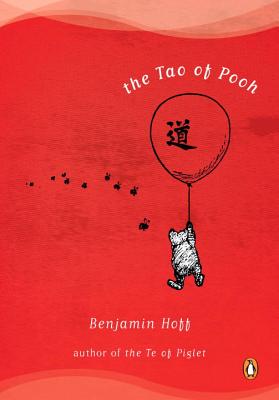
This allegorical wonderland of a book uses the fictional world of Winnie-the-Pooh to illustrate basic principles of philosophical Taoism for a Western audience. For example, Hoff argues that Pooh demonstrates the Taoist Wu Wei principle of “effortless doing.” Hoff also overlays excerpts from A.A. Milne’s Pooh stories with Taoist texts from Laozi and Zhuang Zhou. While more of a “study” compared to The Alchemist, The Tao of Pooh covers many of the same philosophical principles in a digestible and fun way that can actually enhance the experience of reading Coelho and Coelho-adjacent books.

Masking a philosophical journey and the deep quest for meaning as a cross-country motorcycle trip, Zen and the Art of Motorcycle Maintenance raises questions about man’s relationship to art, technology, reason, and the nature of reality that were ahead of their time when the novel was published in 1974. Written as a fictionalized autobiography, Zen and the Art of Motorcycle Maintenance was inspired by a real-life 17-day journey Pirsig made with his son from Minnesota to Northern California in the 1960s—a fact that instantly draws parallels with Coelho’s personal pilgrimage in The Pilgrimage inspiring the journey within The Alchemist.

Structured as poetic sermons on love, work, freedom, and death, this lyrical book is ideal for readers wanting spiritual nourishment in small doses. Like The Alchemist, The Prophet is strong in its philosophical tone and moral clarity. Both books speak in timeless, symbolic language, and are meditations on serenity. The Prophetbridges mysticism and humanism, reminding us that true enlightenment comes from understanding the divine nature of ordinary life.

What started a self-published book sold out of car trunks, and later became an international phenomenon, is a mystical adventure with big ideas about the evolution of human consciousness. Its protagonist, an unnamed narrator, travels through Peru uncovering nine ancient insights, encountering mentors, synchronicities, and challenges that guide him to an evolved view of the universe. Like The Alchemist, The Celestine Prophesy emphasizes intuition, energy, and the importance of following one’s destiny, mirroring Coelho’s underlying message to lead a more connected, purpose-driven existence.
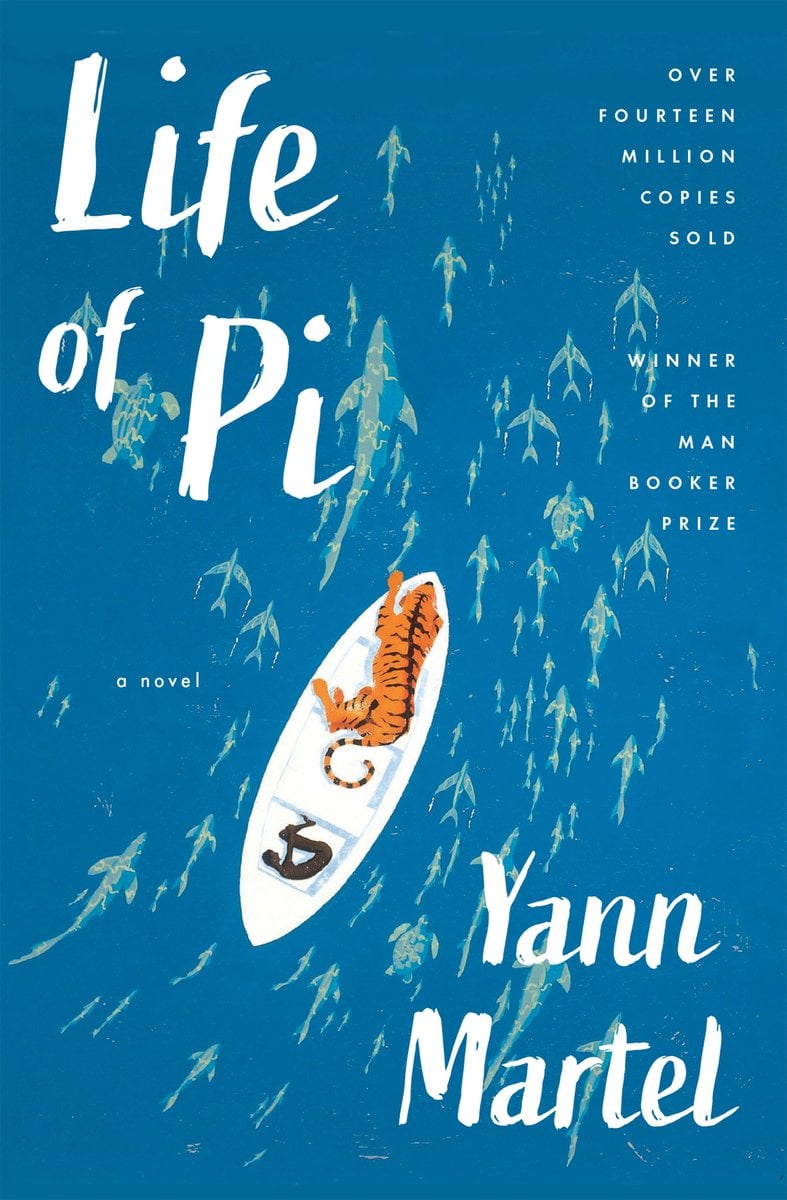
This enduring classic explores a young man’s spiritual awakening through a fantastical journey of survival and faith. After surviving a shipwreck, Pi Patel finds himself aboard a lifeboat with a Bengal tiger. Like Coehlo’s Santiago in The Alchemist, Pi embraces uncertainty, interprets omens, and confronts fears to ultimately experience profound transformation. The difference is that Pi does this while making peace with a potentially fatal roommate. His external struggle mirrors an inner quest for meaning, trust, and surrender, and the tale blends magical realism and allegory, suggesting that spiritual truth, imagination, and perseverance transcend all.

Part memoir, part fable, Way of the Peaceful Warrior brings Greek philosophy into the modern day when Dan, a college gymnast, finds an unlikely mentor at a gas station. “Socrates” challenges Dan to reframe his ideas of success and happiness, further encouraging him to shift his view of reality. Dan’s awakening echos Santiago’s in The Alchemist, as both young men learn the value of inner stillness and awareness. Like Santiago, Dan discovers that wisdom lies in the journey itself.

Inglenook Lit is an online literary magazine for magic enthusiasts and enchantment seekers
Copyright © 2021-2026
Inglenook Lit LLC

